There's no single "right" way to begin a faith community's renewable energy journey. Some houses of worship are ready to install solar panels tomorrow. Others need to start smaller, with better insulation or a more efficient furnace. And some are just beginning to ask the question at all.
That's exactly how Project HOW is built to work. Rather than a single prescribed path, it offers a set of pathways congregations can take in whatever order and combination fits their community's priorities and resources.
- Start with knowledge: the energy audit. For many congregations, the first step isn't a purchase, it's a conversation. A free energy audit and site assessment from the HOW Team gives your congregation a clear picture of where energy is being wasted and where the biggest opportunities lie, before any money is spent.
- Tighten what you already have. Not every congregation is ready for a full electrification project, and that's alright. Upgrading insulation, windows, HVAC systems, and lighting can meaningfully cut both costs and emissions, often for less investment than people expect, and it's a natural first move for a building that's still years away from a full transition.
- Move away from fossil fuels, system by system. Electrification means replacing gas and fuel-burning equipment with efficient electric alternatives: heat pumps for heating and cooling, induction stoves in the kitchen, electric water heaters, even EV charging stations for staff and congregants. Each swap is a tangible step away from combustion and toward a cleaner future.
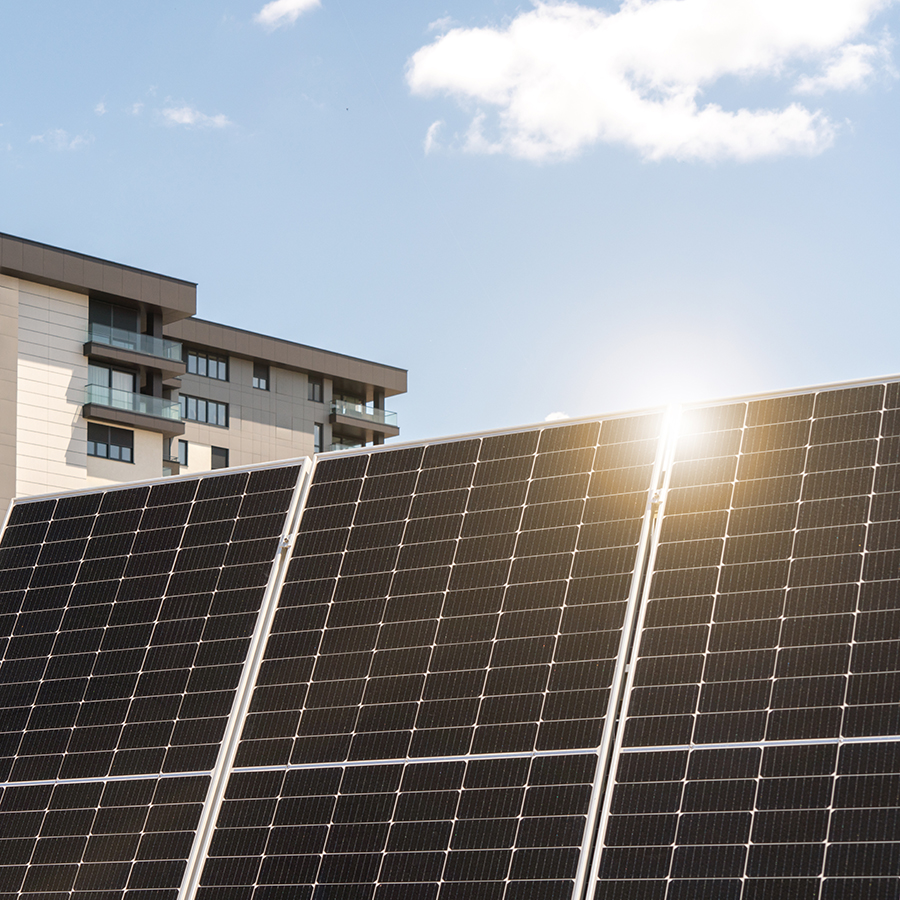
- Bring in the sun. Solar power is often what people picture first when they think of a congregation "going green," and for good reason: it delivers clean energy while lowering utility bills over time. Congregations don't have to own their system outright to benefit. Direct ownership, leasing, and Power Purchase Agreements all offer different ways in, depending on a congregation's finances and long-term plans.
- Pair solar with storage, and gain resilience. Solar panels paired with battery storage do something a grid-tied system alone can't: keep the lights on during an outage. That means medical devices keep running, refrigeration keeps food and medicine safe, and communications stay open when a community needs them most. It's also the foundation for something even bigger.
- Become a resilience hub for your whole community. With solar and battery storage in place, a house of worship can become far more than a place of gathering. It can serve as a cooling or warming center, a charging station, a place of refuge, a safe and powered haven exactly when neighbors need one most.
None of these steps require the others to come first. A congregation might start with an energy audit and stop there for a season. Another might skip straight to solar. What matters isn't which pathway you take or how fast you move. What matters is starting.
Ready to find your faith community's path?
👉 Learn more about Project HOW at: https://www.nm-ipl.org/our-work/project-how
or,
👉 Get started with Project HOW at: https://www.nm-ipl.org/our-work/get-started-project-how